Translate

Tuesday, 15 April 2025

Big Four Most Poisonous Sankes Of Pakistan ہاکستان کے زہریلے سانپ

 سوال:

بگ فور (bigfour)   میں کونسے سانپ پائے جاتے ہیں؟

جواب:

"بگ فور" کی اصطلاح 20ویں صدی کے شروع میں برطانوی ہیرپٹالوجسٹ ڈاکٹر جوزف لاک ہارٹ نے وضع کی تھی۔ اس وقت، یہ چار سانپ پائے جاتے ہیں:-


1.کامن کریٹ(common krait)-

2.کوبرا ( cobra)-

3.رسل وائپر ( Russell viper)-

4.ساءسکیلڈ وائپر (Saw-scaled viper)


 برطانوی ہندوستان میں سانپ کے کاٹنے سے ہونے والی زیادہ تر اموات کے ذمہ دار تھے، جس میں پاکستان بھی شامل ہے۔


ڈاکٹر لاک ہارٹ، جو انڈین میڈیکل سروس میں کام کر رہے تھے، نے تسلیم کیا کہ یہ چار انواع سب سے زیادہ زہریلی اور مہلک ہیں، اس لیے ان کی شناخت اور سمجھنا سب سے اہم ہے۔ انہوں نے صحت عامہ اور طبی اہمیت کے لحاظ سے ان کی اہمیت پر زور دیتے ہوئے انہیں "بگ فور" سانپ کہا۔


"بگ فور" کا نام تب سے پاکستان سمیت خطے میں بڑے پیمانے پر اپنایا گیا ہے، ان چاروں انواع کے حوالے سے، جنہیں اب بھی ملک میں سب سے خطرناک اور طبی لحاظ سے اہم سانپ سمجھا جاتا ہے۔


1.کامن کریٹ(common krait)-:


کامن کریٹ Elapidae family سے تعلق رکھنے 

Common Krait (Bungarus caeruleus) سانپوں کی یہ ایک زہریلی نسل ہے جو جنوبی ایشیاء بشمول پاکستان، بھارت، سری لنکا، بنگلہ دیش، نیپال اور بھوٹان میں پائی جاتی ہے۔


سانپ کا ایک پتلا، لمبا جسم ہوتا ہے جس کا سر چپٹا ہوتا ہے، اور اس کے جسم کا رنگ سیاہ سے گہرا بھورا ہوتا ہے جس میں سفید یا پیلے رنگ کے کراس بینڈ یا دھاریاں ہوتی ہیں۔ اس کا پیٹ سفید یا کریم رنگ کا ہوتا ہے اور اس کی دم پتلی، نوکیلی ہوتی ہے۔ یہ 3-4 فٹ (90-120 سینٹی میٹر) کی اوسط لمبائی تک بڑھتا ہے۔


کامن کریٹ رات کو ایکٹو ہوتا ہے،  دن کو یہ مختلف جگہوں مثلاً بلوں ،خشک پتوں اور جھاڑیوں  میں چھپا رہتا ہے ۔اور چھپکلی، مینڈک اور چوہا جیسے چھوٹے شکار کا شکار کرتا ہے۔ یہ خوراک یا پناہ گاہ کی تلاش میں گھروں اور عمارتوں میں داخل ہوتا ہے اور دیواروں اور درختوں پر چڑھ سکتا ہے۔ دن کے وقت، یہ تاریک، ویران علاقوں میں چھپ جاتا ہے۔

کامن کریٹ کا زہر نیوروٹوکسک ہے، جو سانس کی ناکامی کا باعث بنتا ہے، اور اس کے کاٹنے کی علامات میں بے حسی، کمزوری، فالج اور سانس لینے میں دشواری شامل ہیں۔ اگرچہ اس کا زہر انتہائی زہریلا ہوتا ہے، لیکن اگر فوری طور پر علاج کیا جائے تو کاٹنا شاذ و نادر ہی مہلک ہوتا ہے۔


سانپ شہری اور دیہی علاقوں میں رہتا ہے، بشمول گھروں، عمارتوں، باغات اور کھیتوں میں، خاص طور پر ان علاقوں میں جہاں چوہا کا حملہ ہوتا ہے۔ مادہ کریٹس عموماً 6-12 انڈے دیتی ہیں، جو تقریباً دو ماہ کی مدت کے بعد ان بچے نکلتے ہیں۔ نوجوان کریٹس تقریباً 12 انچ (30 سینٹی میٹر) لمبے اور پیدائش سے آزاد ہوتے ہیں۔


کریٹ کے کاٹنے سے بچنے کے لیے، گھروں کو صاف ستھرا اور بے ترتیبی سے پاک رکھیں،  چھپنے کی جگہوں اور چوہوں کے لیے پناہ گاہ کو ہٹا دیں۔ رات کو جوتے پہنیں اور تاریک جگہوں پر چلتے وقت ٹارچ کا استعمال کریں۔ اگر کاٹ لیا جائے تو فوری طور پر طبی امداد حاصل کریں۔ زہر چوسنے کی کوشش نہ کریں اور نہ ہی جوگیؤں سے علاج کروانے میں اپنا وقت ضائع کریں ۔، کیونکہ یہ طریقے غیر موثر اور خطرناک ہیں۔ کریٹ کے کاٹنے کے لیے اینٹی وینم دستیاب ہے، اور فوری طبی علاج بقا کے امکانات کو نمایاں طور پر بہتر بنا سکتا ہے۔

اس ساون ،بھادو کے موسم میں بہت زیادہ ایکٹو ہوتے ہیں یہ موسم انکی سیکسوئل ریپروڈکشن کا ہوتا ہے۔

اور اس کی تعداد بہت زیادہ بڑھ رہی ہے ۔


.کوبرا ( cobra):-

یہ سانپ Elapidae family سے تعلق رکھتا ہے۔

کوبرا (ناجا ناجا) ایک زہریلا سانپ ہے جو پاکستان، بھارت، سری لنکا اور بنگلہ دیش سمیت جنوبی ایشیا میں پایا جاتا ہے۔


کوبرا کا ایک پتلا، لمبا جسم ہوتا ہے جس کا سر ہڈ کی شکل کا ہوتا ہے، اور اس کے جسم کا رنگ سفید یا پیلے رنگ کے پیٹ کے ساتھ بھورے سے سیاہ تک مختلف ہوتا ہے۔ یہ 4-6 فٹ (120-180 سینٹی میٹر) کی اوسط لمبائی تک بڑھتا ہے۔ خطرہ ہونے پر، یہ اپنے جسم کو زمین سے اوپر اٹھا سکتا ہے اور اپنا ہڈ پھیلا سکتا ہے، جس سے خود کو بڑا دکھائی دیتا ہے۔


کوبرا رات و دن کے وقت متحرک رہتا ہے، اور چھوٹے شکار جیسے چوہوں، پرندوں اور چھپکلیوں کا شکار کرتا ہے۔ یہ ایک ہنر مند کوہ پیما ہے اور خوراک یا پناہ گاہ کی تلاش میں گھروں اور عمارتوں میں داخل ہو سکتا ہے۔ لیکن یہ عموماً آبادیوں سے دور رہنے کو پسند کرتاہے۔


کوبرا کا زہر نیوروٹوکسک اور ہیموٹوکسک ہے، جو سانس کی ناکامی، کارڈیک گرفت اور گردوں کی ناکامی کا باعث بنتا ہے۔ اس کے کاٹنے کی علامات میں درد، سوجن، بے حسی، کمزوری اور سانس لینے میں دشواری شامل ہیں۔ اگر علاج نہ کیا جائے تو کوبرا کے کاٹے جان لیوا ہو سکتے ہیں۔


کوبرا شہری اور دیہی علاقوں میں رہتا ہے، بشمول گھروں، عمارتوں، باغات اور کھیتوں میں۔ مادہ سانپ 20-40 انڈے دیتی ہے، جو تقریباً دو ماہ کی مدت کے بعد  ان سے بچے نکل آتے ہیں۔ نوجوان کوبرا تقریباً 18 انچ (45 سینٹی میٹر) لمبے اور پیدائش سے آزاد ہوتے ہیں۔


کوبرا کے کاٹنے سے بچنے کے لیے، گھروں کو صاف ستھرا اور بے ترتیبی سے پاک رکھیں، خوراک کو سیل بند ڈبوں میں ذخیرہ کریں، اور چھپنے کی جگہوں اور چوہوں کے لیے پناہ گاہوں کو ہٹا دیں۔ ایسے علاقوں میں چلتے وقت جوتے اور لمبے کپڑے پہنیں جہاں کوبرا عام ہیں۔ اگر کاٹ لیا جائے تو فوری طور پر طبی امداد حاصل کریں۔ کوبرا کے کاٹنے کے لیے اینٹی وینم دستیاب ہے، اور فوری طبی علاج بقا کے امکانات کو نمایاں طور پر بہتر بنا سکتا ہے۔


3.رسل وائپر ( Russell viper):-


رسل کا وائپر (Daboia russelii)  ،Viperidae family سے تعلق رکھنے والے سانپوں کی ایک انتہائی زہریلے سانپ کی نسل ہے جو جنوبی ایشیاء بشمول ہندوستان، سری لنکا، پاکستان، بنگلہ دیش اور نیپال میں پائی جاتی ہے۔ یہ کھلے، گھاس یا جھاڑی والے علاقوں، جنگلات، باغات، کھیتی باڑی اور شہری علاقوں میں آباد ہے۔ شناختی خصوصیات میں ایک مضبوط جسم شامل ہے جس میں ایک چپٹا، مثلث سر، آنکھ اور نتھنے کے درمیان ایک مخصوص گڑھا، اور سرزمین ایشیا میں 120 سینٹی میٹر (47 انچ) کی اوسط لمبائی کے ساتھ جسم کی لمبائی 166 سینٹی میٹر (65 انچ) تک ہے۔ اس کے جسم کا رنگ بھورے سے سرمئی تک مختلف ہوتا ہے، جس میں سیاہ دھبوں یا دھاریوں کی تین قطاریں ہوتی ہیں۔ رسل کا وائپر رات کے وقت سرگرم رہتا ہے لیکن ٹھنڈے موسم میں روزانہ ایکٹو پایاجاتا ہے، چوہا، چھوٹے رینگنے والے جانور، زمینی کیکڑے، بچھو اور آرتھروپوڈ کو کھاتا ہے۔


کاٹنے سے بچنے کے لیے، لمبی گھاس اور درختوں کے پتوں کو اٹھانے سے پرہیز کریں عموماً اس موسم میں۔۔، لمبے کپڑے اور جوتے پہنیں، اور رات کو ٹارچ کا استعمال کریں۔ اگر کاٹ لیا جائے تو فوری طور پر طبی امداد حاصل کریں۔ اینٹی وینم دستیاب ہے، اور فوری طبی علاج بقا کے امکانات کو نمایاں طور پر بہتر بنا سکتا ہے۔ رسل کا وائپر زہر انتہائی زہریلا ہے، جس سے نکسیر، گردوں کی خرابی، اور سانس کی تکلیف ہوتی ہے۔ زہر خون کے جمنے کے لیے ان وٹرو تشخیصی ٹیسٹ میں بھی استعمال ہوتا ہے، جسے ڈائلوٹ رسل کے وائپر وینم ٹائم (dRVVT) ٹیسٹ کے نام سے جانا جاتا ہے۔


مادہ رسل وائپرز تقریباً چھ ماہ کے حمل کے بعد 20-40 بچوں کو جنم دیتے ہیں۔ نوزائیدہ سانپ تقریباً 20-30 سینٹی میٹر (8-12 انچ) لمبے اور پیدائش سے آزاد ہوتے ہیں۔ رسل کے وائپر کو IUCN ریڈ لسٹ میں سب سے کم تشویش کے طور پر درج کیا گیا ہے، لیکن رہائش گاہ کی تباہی، ٹکڑے ٹکڑے ہونے اور انسانی ظلم و ستم کی وجہ سے اس کی آبادی کم ہو رہی ہے۔ یاد رکھیں، رسل وائپر ایک خطرناک سانپ ہے، اور احتیاط اور آگاہی جان لیوا مقابلوں سے بچنے کی کلید ہے۔


رسل وائپر پاکستان میں پائے جانے والے"بڑے چار" سانپوں میں سے ایک ہے، جو سانپ کے کاٹنے سے ہونے والی زیادہ تر اموات کے لیے ذمہ دار ہے۔ اس کا زہر انتہائی زہریلا ہے، اور کاٹنے سے شدید درد، سوجن، خون بہنا، اور گردوں کی خرابی ہو سکتی ہے۔ اگر آپ کو رسل وائپر کا سامنا کرنا پڑتا ہے، تو اس کے قریب نہ جائیں۔ اس کے بجائے، مدد کے لیے کسی پیشہ ور سانپ ہینڈلر یا مقامی حکام کو کال کریں۔ اس نوع کو سمجھنے اور اس کا احترام کرنے سے، ہم محفوظ طریقے سے ایک ساتھ رہ سکتے ہیں۔


4.ساسکیلڈ وائپر (Saw-scaled viper):-


Saw-Scaled Viper (Echis carinatus) ایک انتہائیviperidae family سے تعلق رکھنے والے 

    زہریلا سانپ ہے جو پاکستان ،انڈیا،بنگلہ دیش ،نپال وغیرہ ،مشرق وسطیٰ اور افریقہ کے خشک علاقوں میں پایا جاتا ہے۔ یہ ریتلی یا پتھریلی مٹی کے ساتھ بنجر علاقوں میں آباد ہے، اور اس کی شناخت اس کے مخصوص آری نما ترازو، مثلث سر اور چپٹی، چوڑی دم سے ہوتی ہے۔ لمبائی میں 30 انچ (76 سینٹی میٹر) تک بڑھتے ہوئے، یہ چھوٹے ستنداریوں، چھپکلیوں اور کیڑوں کو کھاتا ہے۔ اس کا زہر انتہائی زہریلا ہے، جس سے نکسیر، گردوں کی خرابی، اور سانس کی تکلیف ہوتی ہے۔


Saw-Scaled Viper رات کا اور جارحانہ ہوتا ہے جب دھمکی دی جاتی ہے، اس کی دم کو سانپ کی طرح ہلاتی ہے۔ یہ بیضوی ہے، فی لیٹر 20 تک بچوں کو جنم دیتا ہے۔ کم از کم تشویش کے طور پر درج، رہائش گاہ کی تباہی کی وجہ سے کچھ علاقوں میں اس کی آبادی کم ہو رہی ہے۔ اس سانپ کا سامنا انتہائی خطرناک ہے، اور احتیاط اور آگاہی بہت ضروری ہے۔ اسے سنبھالنے یا اس تک پہنچنے سے گریز کریں، اور اگر سامنا ہو تو کسی پیشہ ور سانپ ہینڈلر یا مقامی حکام کو مدد کے لیے کال کریں۔


Saw-Scaled Viper صحت عامہ کی ایک اہم تشویش ہے، خاص طور پر دیہی علاقوں میں جہاں طبی دیکھ بھال تک محدود رسائی ہے۔ اس کا زہر انتہائی زہریلا ہے، اور اگر علاج نہ کیا جائے تو کاٹنا مہلک ہو سکتا ہے۔ کاٹنے کی صورت میں فوری طبی امداد ضروری ہے۔ اس نوع کو سمجھنے اور اس کا احترام کرنے سے، ہم محفوظ طریقے سے ایک ساتھ رہ سکتے ہیں۔ یاد رکھیں، Saw-Scaled Viper ایک خطرناک 

سانپ ہے جو ہماری احتیاط اور احترام کا تقاضا کرتا ہے۔


پاکستان کے تقریباً ہر علاقے سے یہ اقسام خصوصاََ کامن کریٹ ریپورٹ ہو  رہا ہے۔۔اس موسم سارے سانپ بہت زیادہ تعداد میں باہر نکل آتے ہیں ۔رات کو زمین پر سونے ،کھیتوں کو پانی لگانے ،پانی اور گھاس والی جگہوں پر جانے سے گریز کریں ۔رات کو اٹھتے وقت ٹارچ ساتھ رکھے۔


Will Elon Musk succeed in establishing a human colony on Mars?


Elon Musk is known for pushing the boundaries of technology and innovation with his groundbreaking projects. Here are some of his most astonishing and futuristic ventures:Sending Humans to Mars: SpaceX aims to establish permanent human colonies on Mars. This ambitious goal represents a bold step towards making humanity a multi-planetary species.Starship Rocket: SpaceX’s Starship rocket is designed for large-scale space travel. This high-capacity rocket could transport humans from Earth to Mars and beyond.Hyperloop: This super-fast transportation system uses vacuum-sealed tubes and capsules that can travel at speeds of up to 750 mph (1,200 km/h). Musk envisions it revolutionizing city-to-city travel.Neuralink: Neuralink aims to create a direct interface between the brain and computers. This technology could enhance


cognitive abilities and potentially treat neurological disorders.Boring Company Tunnels: The Boring Company is developing deep tunnel systems to improve urban transportation. These projects promise to alleviate traffic congestion and make commuting more efficient.SolarCity and Sustainable Energy: SolarCity focuses on making solar energy more accessible, with the goal of providing clean energy on a global scale. Musk’s vision is to make sustainable energy a standard practice worldwide.These projects exemplify Elon Musk’s vision of transforming technology and human life on a fundamental level. If you’re intrigued by futuristic tech and groundbreaking ideas, don’t forget to follow me! Stay tuned to explore more about these innovative concepts shaping our future!


معدہ کیلئے بہترین پھکی جو مردانہ کمزوری سے بچاتی ہے

 مردانہ کمزوری کا علاج جب بھی شروع کریں اس کی ابتداء معدے سے کریں کیونکہ مردانہ کمزوری کی جڑ معدہ سے شروع ہوتی ہے


قبض بدہضمی تیزابیت کھانا کا ہضم نہ ہونا بھوک کی کمی وقت بے وقت کھانا بسیارخوری ان سب علامات کی موجودگی ہو تو سب سے پہلے ان امراض و عادات کا علاج کریں اس کے لئےآپ کا معدہ مکمل طور پر ٹھیک ہو جائے تو پھر دوسرا علاج شروع کریں معدے کے لئے یہ نسخہ استعمال کریں


سفوف معدہ 

تبخیر بھوک کا نہ لگنا گیس تیزابیت ڈکار آنا بد ہضمی قبض ضعف معدہ کے لیے لاجواب سفوف ہے


عمر کے بڑھنے کے ساتھ ساتھ معدہ کے مسائل بھی بڑھنے لگتے ہیں کبھی بد ہضمی ہو جاتی ہے تو کبھی بھوک نہیں لگتی پیٹ میں اکثر گیس کی شکایت رہنے لگتی ہے سینے پے بوجھ جلن بلغم وغیرہ کی شکایت بھی ہو جاتی ہے اگر کبھی روٹین سے زیادہ کھا پی لیا جائے تو قبض ہو جاتی ہے اور بھی کی طرح کے مسائل کا سامنا کرنا پڑتا ہے


اب آپکو ڈھلتی عمر کے باعث یا کسی بھی وجہ سے ان مسائل کا سامنا نہیں کرنا پڑے گا کیوں کہ ذیل میں بیان کردہ دیسی نسخہ مندرجہ بالا تمام امراض کے مکمل خاتمے کے لئے عمدہ علاج ہے آپ کامل یقین کے ساتھ تیار کر کے استعمال کریں اس نسخے کے لئے عمر کی کوئی حد نہیں جوان بوڑھا بچہ عورت وغیرہ سبھی استعمال کر سکتے ہیں

نسخہ مضر اثرات سے بلکل پاک ہے


دانا الائچی کلاں 5 تولہ

انار دانہ5 تولہ

سناءمکی مصفی 5 تولہ

مگھاں 5 تولہ

سونف 5 تولہ

دھنیا خشک 5 تولہ

اجوائن دیسی 5 تولہ

پودینہ خشک 10 تولہ

زیرہ سفید 10 تولہ

سنڈھ 10 تولہ

کالی مرچ 3 تولہ

نوشادر 2 تولہ

کلونجی 3 تولہ

نمک سیاہ1 تولہ

نمک سفید 1 تولہ


ترکیب تیاری و استعمال

تمام اجزاء کو اچھی طرح صاف کرنے کے بعد پیس رگڑ لیں جب باریک ہو جائے تو سنبھال لیں کھانا کھانے کے دو منٹ بعد چھوٹی آدھی چمچ تازہ مگر سادہ پانی کے ساتھ استعمال میں لائیں

مردانہ کمزوری نامردی کا بہترین علاج ایک بہت بہترین نسخہ

 جب مردانہ کمزوری کا علاج کرتے کرتے مایوسی گھیرے میں لے


چکی ہو یانی تاریکیاں مقدر دکھائی دیتی ہوں اس دور میں امید کے سورج کو طلوع کرنے والا ایک نایاب نسخه دور حاضر میں بوڑھوں نوجوانوں یہاں تک کے بچوں میں بھی جریان احتلام یانی دھات کا گرنا جیسا موذی مرض عام ہو گیا ہے ۔۔۔ بچپن کی غلط کاریوں کی وجہ سے وہ نوجوان جو مغلظ نسخہ استعمال کرتے ہیں معدے کی خرابی کی وجہ سے  نسخہ صحیح طور پر اثر نہیں کر پاتا بجاۓ بیماری کم ہونے کے زیادہ بڑھ جاتی ہے تو آپ لوگوں کی ساری شکایتوں کا حل نکال کر ایک مرکب ترتیب دے رہا ہوں جو بافضل باری تعالیٰ معدے کی خرابی کو بھی درست کرے گا قبض کو دور کرے گا معدے کے تمام  امراض کو درست کریگا جب معدہ درست ہو جائے تو نظام جسمانی غذا کو جذب کریگا جس سے سے خون صالحہ پیدا ہو گا ۔  تو اس سے رابطہ نہ کریں یہ نسخہ آپکی کی مردانہ کمزوری جریان ،زکاوت حس ،سرعت انزال، کو جڑ سے ختم کرکے قوت باہ بے حد اضافہ کریگا منی کو گاڑھا کریگا عضو تناسل کی کمزوری کو دور کر کے آپکے عضو مخصوص کے پٹھوں کو مضبوط بنانے کے ساتھ ساتھ گردوں کو طاقت دے گا اسے بناکر استعمال کرنے سے آپکی جسمانی طاقت دو چند ہو جائیگی گی یہ میں اپنے تجربات کی بنیاد پر کہتا ہوں۔۔۔اور ہاں یہ نسخہ ہر مزاج والا انسان استعمال کر سکتا ہے یہ نسخہ کسی قسم کے مزاج کا پابند نہیں ہے 


بلند فشارِ خون والے ڈیابٹیس والے سب استعمال کریں کوئی مسئلہ نہیں


نسخه ھوالشافی

* موچرس                    75 گرام* 

*خشخاص سفید           75 گرام*

* تالمکھانہ                   75 گرام* 

* آرد سنگھاڑہ              75 گرام* 

* سمندر سوکھ            75 گرام*

* بیچ بند                    75 گرام*

*مصطگی رومی         75 گرام*

* موصلی سفید           75 گرام*

* ستاور                     75 گرام*

عنبر اشہب                 5 گرام*

اس نسخے میں جزء خاص کے طور پر عنبر اشہب اور مصطگی رومی کا استعمال کیا گیا ہے بس نسخہ اسی پر منحصر ہے کیونکہ یہی دونوں اجزاء اس نسخے کی جان ہے اسکے علاوہ تمام اجزاء بھی ایک نمبر لینے ہیں 

 تمام اجزاء لیکر سفوف بنا لیں یہ نسخہ تیس دن استعمال کرنا ہے

 طریقہ استعمال 

آدھی چمچ صبح و شام کھالی پیٹ دودھ سے استعمال کریں ۔


Tuesday, 27 September 2016

مصری کی ڈلی


ایک یہودی کے پاس ایک مسلمان ہیرے تراشنے کا کام کرتا تھا۔ جو اپنے کام میں ہنر مند اور حد سے زیادہ ایماندار تھا۔ یہودی اس سنار کی کاریگری سے بے تحاشہ نفع کمانے کے باوجود اُسے مناسب معاوضہ ادا نہ کرتا تھا ۔ جس کی وجہ سے وہ بمشکل اپنے گھر کا خرچہ پورا کرتا تھا۔ یونہی کام کرتے کرتے اس نے عمر گزار دی۔ اس کی بیٹی جوان ہو گئی وہ اپنی قلیل آمدنی میں سے کچھ بھی جمع نہ کر سکا۔ بیٹی کی شادی کے لئے سنار کاریگر نے یہودی سے کچھ رقم بطور ادھار مانگی کروڑ پتی یہودی نے رقم دینے سے معذوری ظاہر کر دی۔ سنار اپنی قسمت کو برا بھلا کہتا ہوا گھر لوٹ آیا۔ رقم ادھار نہ ملنے پر بیوی نے سخت ناراضگی اور طعنوں کے تیر برسا کر الگ استقبال کیا۔ پریشان حال بیچارہ ساری رات سوچتا رہا اب کیا ہو گیا۔ دوسرے دن وہ دکان پر کام کے لئے نہ گیا۔ بعد میں یہودی سنار کے بلانے پر جب وہ دکان پر پہنچا تو اس کے ہاتھ میں ایک پوٹلی تھی۔ جو اس نے یہودی کے سامنے کھول کر رکھ دی۔ اس میں قیمتی ہیرا دیکھ کر یہودی سوالیہ نگاہوں سے کاریگر سنار کی طرف دیکھنے لگا۔
کاریگر بولا مالک یہ ہمارا خاندانی ہیرا ہے۔ اسے بیچنے کی اجازت نہیں آپ اسے گروی رکھ کر مجھے کچھ رقم دے دیں۔ میں آپ کو رقم لوٹا کر اپنا ہیرا واپس لے لوں گا۔ یہودی راضی ہو گیا۔
مسلمان کاریگر نے قرضے کی رقم سے بیٹی کی شادی کر دی۔ پھر دن رات کام کر کے قرض کی رقم آہستہ آہستہ ادا کرنے لگ گیا۔ قرضے کی آخری قسط ادا کرنے کے بعد مسلمان کاریگر نے اپنے ہیرے کا مطالبہ کیا ۔ یہودی نے وہ ہیرا لا کر اس کے سامنے رکھ دیا۔ ہیرا تراشنے والے کاریگر نے ہیرا لے کر پانی میں رکھ دیا۔ دیکھتے ہی دیکھتے ہیرا گھُل کر ختم ہو گیا۔ ہیرا تراشنے والے کاریگر نے کہا مالک یہ مصری کی ڈلی تھی۔ جسے میں نے اپنے فن سے ہیرے کا اس طرح سے روپ دیا تھا کہ آپ جیسا سنار بھی دھوکہ کھا گیا۔ آپ نے میری عاجزی اور درخواست پر قرضہ نہ دیا۔ جس کی وجہ سے مجھے یوں آپ سے رقم نکلوانی پڑی میں مسلمان ہوں اس لئے بھاگا نہیں آپ کی پائی پائی ادا کر کے سرخرو ہو گیا۔ افسوس کہ آپ نے میری قدر نہ کی۔ اس لئے ملازمت چھوڑ کر جا رہا ہوں۔ کاریگر یہودی کو پریشان چھوڑ کر چل دیا۔
اللہ تعالٰی کا حکم ہے کہ ضرورت مندوں کی ضروریات کو پورا کیا جائے، ایسا کرنے سے معاشرے سے برائیاں ختم ہو جاتی ہیں۔ !!!

ﺣﻀﺮﺕ ﺍﺑﻮ ﺑﮑﺮ ﺻﺪﯾﻖ ﺭﺿﯽ ﺍﻟﻠﮧ ﻋﻨﮧ

ﺣﻀﺮﺕ ﺍﺑﻮ ﺑﮑﺮ ﺻﺪﯾﻖ ﺭﺿﯽ ﺍﻟﻠﮧ ﻋﻨﮧ
ﮐﺎ ﻣﻌﻤﻮﻝ ﺗﮭﺎ ﮐﮧ ﺁﭖ ﻓﺠﺮ ﮐﯽ ﻧﻤﺎﺯ
ﮐﮯ ﺑﻌﺪ ﺻﺤﺮﺍ ﮐﯽ ﻃﺮﻑ ﻧﮑﻞ ﺟﺎﺗﮯ،
ﻭﮨﺎﮞ ﭼﻨﺪ ﺳﺎﻋﺘﯿﮟ ﮔﺰﺍﺭﺗﮯ ﺍﻭﺭ ﻭﺍﭘﺲ
ﻣﺪﯾﻨﮧ ﺁﺟﺎﺗﮯ- ﺣﻀﺮﺕ ﻋﻤﺮ ﺭﺿﯽ ﺍﻟﻠﮧ
ﻋﻨﮧ ﮐﻮ ﺑﮍﺍ ﺗﻌﺠﺐ ﮨﻮﺍ ﮐﮧ ﺍﺑﻮﺑﮑﺮ ﺻﺒﺢ
ﮨﯽ ﺻﺒﺢ ﺻﺤﺮﺍ ﻣﯿﮟ ﮐﯿﺎ ﻟﯿﻨﮯ ﺟﺎﺗﮯ
ﮨﮟ-
ﺍﯾﮏ ﺩﻥ ﻓﺠﺮ ﮐﯽ ﻧﻤﺎﺯ ﮐﮯ ﺑﻌﺪ
ﺍﻧﮩﻮﮞ
ﻧﮯ ﭼﮭﭗ ﮐﺮ ﺍﺑﻮﺑﮑﺮ ﺭﺿﯽ ﺍﻟﻠﮧ
ﻋﻨﮧ
ﮐﺎ ﺗﻌﺎﻗﺐ ﮐﯿﺎ،
ﺍﺑﻮﺑﮑﺮ ﺭﺿﯽ ﺍﻟﻠﮧ ﻋﻨﮧ ﻣﻌﻤﻮﻝ ﮐﮯ
ﻣﻄﺎﺑﻖ ﻣﺪﯾﻨﮧ ﺳﮯ ﻧﮑﻠﮯ ﺍﻭﺭ ﺻﺤﺮﺍ
ﻣﯿﮟ ﺍﯾﮏ ﭘﺮﺍﻧﮯ ﺧﯿﻤﮯ ﮐﮯ ﺍﻧﺪﺭ ﮔﺌﮯ،
ﻋﻤﺮ ﺭﺿﯽ ﺍﻟﻠﮧ ﻋﻨﮧ ﺍﯾﮏ ﭼﭩﺎﻥ ﮐﯽ
ﺍﻭﭦ ﻣﯿﮟ ﭼﭙﮑﮯ ﺳﮯ ﺍﻧﮩﯿﮟ ﺩﯾﮑﮭﻨﮯ
ﻟﮕﮯ۔
ﺍﺑﻮﺑﮑﺮ ﺭﺿﯽ ﺍﻟﻠﮧ ﻋﻨﮧ ﺗﮭﻮﮌﯼ ﺩﯾﺮ ﺑﻌﺪ
ﺧﯿﻤﮯ ﺳﮯ ﺑﺎﮨﺮ ﺁﺋﮯ ﺍﻭﺭ ﻣﺪﯾﻨﮧ ﺭﻭﺍﻧﮧ
ﮨﻮﮔﺌﮯ، ﻋﻤﺮ ﺭﺿﯽ ﺍﻟﻠﮧ ﻋﻨﮧ ﭼﭩﺎﻥ ﮐﯽ
ﺍﻭﭦ ﺳﮯ ﻧﮑﻠﮯ ﺍﻭﺭ ﺧﯿﻤﮯ ﻣﯿﮟ ﺩﺍﺧﻞ ﮨﻮﺋﮯ،،
ﮐﯿﺎ ﺩﯾﮑﮭﺘﮯ ﮨﯿﮟ ﮐﮧ ﺍﯾﮏ ﻧﺎﺑﯿﻨﺎ
ﮐﻤﺰﻭﺭ
ﻋﻮﺭﺕ ﺍﻭﺭ ﭼﮭﻮﭨﮯﭼﮭﻮﭨﮯ ﺑﭽﮯ
ﺑﯿﭩﮭﮯ ﮨﯿﮟ، ﺁﭖ ﻧﮯ ﺍﺱ ﻋﻮﺭﺕ ﺳﮯ
ﺩﺭﯾﺎﻓﺖ ﮐﯿﺎ: "ﯾﮧ ﮐﻮﻥ ﮨﮯ ﺟﻮ ﺗﻤﮩﺎﺭﮮ ﭘﺎﺱ ﺁﺗﺎ ﮨﮯ؟
" ﺍﺱ ﻧﮯ
ﺟﻮﺍﺏ ﺩﯾﺎ: "ﻣﯿﮟ ﺍﺳﮯ ﻧﮩﯿﮟ ﺟﺎﻧﺘﯽ،
ﮐﻮﺋﯽ ﻣﺴﻠﻤﺎﻥ ﮨﮯ، ﺍﯾﮏ ﻋﺮﺻﮯ ﺳﮯ
ﮨﺮ ﺻﺒﺢ ﮨﻤﺎﺭﮮ ﭘﺎﺱ ﺁﺗﺎ ﮨﮯ- ﭘﻮﭼﮭﺎ: "
ﺗﻤﮩﺎﺭﮮ ﭘﺎﺱ ﺁﮐﺮ ﮐﯿﺎ ﮐﺮﺗﺎ ﮨﮯ؟
ﻭﮦ ﺑﻮﻟﯽ: " ﮔﮭﺮ ﻣﯿﮟ ﺟﮭﺎﮌﻭ ﺩﯾﺘﺎ ﮨﮯ،
ﺁﭨﺎ ﮔﻮﻧﺪﮬﺘﺎ ﮨﮯ، ﮨﻤﺎﺭﯼ ﺑﮑﺮﯼ ﮐﺎ ﺩﻭﺩﮪ
ﺩﻭﮨﺘﺎ ﮨﮯ ﺍﻭﺭ ﭼﻼ ﺟﺎﺗﺎ ﮨﮯ-"
ﺍﺱ ﮐﯽ ﺑﺎﺕ ﺳﻦ ﮐﺮ ﻋﻤﺮ ﺭﺿﯽ ﺍﻟﻠﮧ
ﻋﻨﮧ ﯾﮧ ﮐﮩﺘﮯ ﮨﻮﺋﮯ ﺧﯿﻤﮯ ﺳﮯ ﺑﺎﮨﺮ
ﺁﮔﺌﮯ:
" ﺍﺑﻮﺑﮑﺮ! ﺁﭖ ﻧﮯ ﺍﭘﻨﮯ ﺑﻌﺪ ﮐﮯ ﺧﻠﻔﺎﺀ
ﮐﻮ ﺑﮍﯼ ﻣﺸﮑﻞ ﻣﯿﮟ ﮈﺍﻝ ﺩﯾﺎ، ﺁﭖ ﻧﮯ
ﺍﭘﻨﮯ ﺑﻌﺪ ﮐﮯ ﺧﻠﻔﺎﺀ ﮐﻮ ﺑﮍﯼ ﻣﺸﮑﻞ

ﻣﯿﮟ ﮈﺍﻝ ﺩﯾﺎ-

اٹامک بم

دنیا کا سب سے خوفناک بم "اٹامک بم" کہلاتا ہے اٹامک بم وہ بم ہے جس کے گرتے ہی شہروں کے شہر اور ملکوں کے ملک چند سیکنڈز میں تباہ و برباد ہوجاتے ہیں اور انسان، چرند پرند ہر چیز کوئلہ بن جاتی یے۔
دنیا میں پہلی بار امریکہ نے چاپان کے دو شہروں ہیروں شیماں اور ناگا ساکی پر اٹامک بم گرایا تھا واضح رہے جو امریکہ نے اٹامک بم گرایا تھا وہ سب سے کم مقدار کا انتہائی چھوٹا اٹامک بم تھا لیکن پھر بھی اُس کے گرتے ہی چند سیکنڈ میں ہی دونوں شہر تباہ برباد ہوگئے تھے اور لاکھوں لوگ کوئلہ بن گئے۔ 
آپ اندازہ لگائیں کہ اگر ایک چھوٹے اٹامک بم سے اتنی بڑی تباہی ہو سکتی ہے تو بڑی مقدار کے بڑے اٹامک بم سے کتنی تباہی ہو گی شائد اس کا کوئی اندازہ نہ کرسکے واضح رہے دنیا میں اعلانیہ 6 اٹامک پاور والے ملک ہے جس میں مسلم دنیا سے صرف پاکستان اٹامک پاور میں شامل ہے اور اس وقت پاکستان دنیا کی تیسری بڑی اٹامک پاور والا ملک ہے اور خطے میں ازلی دشمن بھارت بھی اٹامک پاور ہے آج تک دنیا میں کبھی بھی دو اٹامک پاور میں اٹامک جنگ نہیں ہوئی۔
فرض کریں اگر اب انڈیا اور پاکستان میں جنگ ہوتی ہے تو یہ پہلے ہونے والی جنگوں سے مختلف ہوگئی اور یہ ہو کر رہے گا اور اگر اس جنگ میں اٹامک بم چلتا ہے جو کہ ظاہر بات ہے چلے گا تو اس کا کیا رزلٹ ہوگا ظاہر سی بات ہے تباہی اور بربادی واضح رہے کہ پاکستان کا کل سائز انڈیا کی ٹوٹل ایک صوبہ سے بھی چھوٹا ہے اور انڈیا کی کل 32 صوبے ہیں اس میں کوئی شک نہیں کہ انڈیا بہت بڑا ملک ہے بلکہ پورا ایک براعظم ہے اور اسی وجہ سے انڈین ہندو اس خوش فہمی میں مبتلا ہیں کہ اگر ہم پہلے پاکستان پر اٹمامک بم گراتے ہے تو پاکستان تو دو تین اٹامک بموں سے ہی تباہ برباد ہوجائے گا اور اگر جواب میں پاکستان بھی ہم پر دو تین اٹامک بم گراتا ہے تو ہمارے تو صرف 4 یا5صوبے ہی تباہ ہو برباد ہوں گے۔
یہ صرف ہندوؤں کی غلط فہمی ہے اگر زمیں ختم بھی ہوگئی تو سمندر اور فضا کبھی کوئی ختم نہیں کرسکتا واضح رہے پاکستان کی اٹامک ابدوزے جو سمندر کی گہرائیوں میں اٹمامک بموں سے لیس ہے اور ایسی ابدوزے ہیں جو کسی ریڈار پر نہیں آتی کیوکہ وہ سمندر کے انتہائی گہرائیوں میں چلتی ہیں اور ہر ابدوز میں 6 سے 7 اٹامک لیس ہیں اور پاکستان 36سیکنڈ میں سمندر میں سے انڈیا پر 70 اٹامک بم گرا سکتا ہے جس سے انڈیا تو انڈیا رہا انڈیا کے آس پاس کے ملک بھی صفہ اے ہستی سے مٹ جائے گا۔ اور رہی بات فضہ سے تو پاکستان ائیر فورس 90سیکنڈ میں ہوا سے انڈیا پر 150 اٹامک بم گرا سکتی ہیں جس سے ڈھونڈنے سے بھی پتہ نہیں چلے گا کہ انڈیا تھا کدھر۔۔؟؟
واضح رہے امریکہ نے چاپان پر ہوا سے ہی اٹمامک بم گرائے تھے مختصرن ہندوستان کے بُت پرستوں یہ بات نوٹ کرلو اور یہ بات ہندوستان والے بھی خوب جانتے ہیں کہ اگر پاکستان نہ رہا تو رہے گا ہندوستان بھی نہیں اور نہ ہی پھر اسرائیل رہے گا اور یہ بات بھی نوٹ کرلو کہ اگر خدانخواستہ پاکستان ختم بھی ہوگیا تو صرف ایک اسلامی ریاست ہی ختم ہوگی باقی 56اسلامی ریاستیں باقی رہے گیں لیکن اگر ہندوستان ختم ہوگیا تو دنیا پر ہندؤوں کا اور نہ ہی ہندوؤں کی ریاست کا نام ونشان بھی نہیں رہے گا۔۔ انشااللہ

Friday, 23 May 2014

How To Add a Dislike button To Your Facebook status


This is a basic tutorial on how to add a
"didlike" button or a custom button to
your status
First go to the application status magic
(you can just search it in the search bar at
the top of the screen)
Second go back to your home page and
click in the update status box
Third click on status magic at the bottom
of the box
Forth customize what you want the button
to say or leave it the way it is (for the
dislike button)
Fifth update your status

How To Find An Email Address By Facebook ID

Every Facebook user has an email address in the form of Facebook_ID@facebook.com. When you email that address from any email client, the message normally routes to the user's Facebook message inbox. However, if you know a friend or business contact's Facebook ID and want to locate her non-Facebook email address, you can use the ID to visit the associated profile. The contact information only appears if it is public or the user has made it viewable by you.
 Step 1

Log in to Facebook and click inside the address bar in your Web browser.
Step 2

Delete all characters that appear to the right of the forward slash following "facebook.com."

Step 3

Type the Facebook ID of the user whose email address you want to find and press "Enter" on your keyboard. This navigates your browser to the user's Facebook profile.
Step 4

Click "About" in the user's profile to view all of the available information about that user.
Step 5

Scroll down the page until you see the "Contact Info" section. If an "Email" field appears there, all of the user's email addresses visible to you are adjacent to it.

Thursday, 22 May 2014

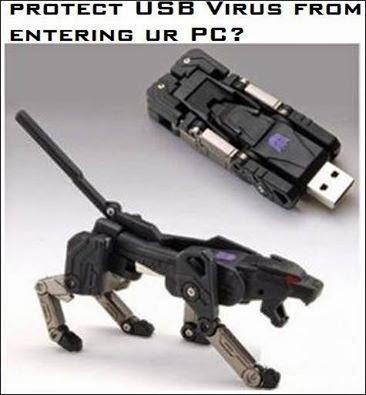
Protect USB virus from Entering Your PC

Hi friends,
You can make ur normal pen drive to virus protected pendrive. for that u want 1 pc which having windows vista 0r 7 os installed. Follow the below steps……..
1) Connect ur pen drive to pc which having widows vista or windows 7 operating system. (The user must having Administrator rights)
2) Open ‘My Computer’ & right click on pendrive icon then select ‘Format’ option. Before formatting you must take a back up of all of your data
because it deletes whole data from ur pen drive.
3) In Format window select file system tab & change it to ‘NTFS’ then click on ‘Start’ to start formatting.
4) After formatting done close the format window & open ur pendrive.
5) create one folder in pen drive & rename it to ‘secured’.
6) Back to ‘My Computer’ & again right click on pendrive & now select ‘Properties’ tab.
7) In properties window select security tab then click on edit & tick on ‘Deny’ for ‘Write’ permission then press ok to apply the settings.
8) Open pen drive again, right click on ‘Secured’ folder select ‘Properties’ then ‘Security’ tab.
again click on ‘Edit’ tab & set ‘Allow’ permission to ‘Full Control’ then click ok to apply settings.
9) Open ‘Secured’ folder, create one folder into that & rename it to ‘Secured.exe’.
10) Right click on ‘Secured.exe’ folder select ‘Properties’ & make it hidden by selecting ‘Hidden’ attribute then select ‘security’ tab click on ‘Edit’ & set ‘Deny’ permission to ‘Full Control’ .
10) Press ‘Ok’ to apply the settings.
Now ur pen drive is virus protected. but u can’t copy files into that directly. u need to copy all of ur files to the secured folder & I recommand that copy ur software setup files to the zip folder so, virus can’t access software’s exe files.

Wednesday, 21 November 2012

List of Prominent Qadiani Perosnalities in Pakistan

 1    Mubasir Ullah DIG lahore
 2   Ahmed Raza Tahir CCPO Lahore
 3   Salman Bashir Secretery Foreign Affairs
 4    Noman Bahir Cheif of the Navel Staff
 5    Ch. Eitizaz Ahsan EX president supereem court Bar
 6   Aasima Jahangir Ex president supereem court Bar
 7    Mubasir Luqman TV Anchor
 8    Rana Mubashir TV Anchor
 9    Najam Sethi Journalist
10   Aslam Khattak National Awami Party
 11  Aftab Ahmed Sherpao (Nephew of Aslam Khattak) PPP
 12   Naheed Khan PPP personal secratary of BeZazeer Bhutto
 13   Sheri Rehman PPP
 14    Mian Manzoor Ahmed Watto Ex Foreign Minister
 15    GM Syed Gea Sindh (Presented resuolation in Sindh Assembly
 16    Mubashir Zafar GM (HR) OGDC
 17    Raiz Mohmmad Khan Ex Secretry foreign affairs and spokes man
 18   Khurshid Mahmood Qasuri Ex foreign Minister
 19   Ahmed Raza Qasuri Lodge FIR against Bhutto
 20   Ahmed Kamal Former Pakistan

Ajmal Kasab hanged in secrecy, buried at Pune's Yerwada Jail

Mumbai: Mohammed Ajmal Amir Kasab, 25, the only terrorist caught alive during the 26/11 attacks on Mumbai, was hanged at Pune's Yerwada Jail at 7:30 this morning. It was a swift and secret execution, just two weeks after President Pranab Mukherjee rejected his mercy petition. Union Home Minister Sushil Kumar Shinde, who said it was all in a day's work, told NDTV that not one of his Cabinet colleagues knew that Kasab would be hanged today and would have learnt of it from TV.

A few hours after he was hanged, Kasab's body was buried at the Pune jail. Pakistan's interior minister Rehman Malik  told NDTV that no request had been made by Kasab's family for repatriation  of his body. "As and when such a request is made, we will approach India accordingly," he said. A Pakistani human rights activist, Ansar Burney, has now offered to claim the terrorist's body, "on humanitarian grounds."

Soon after Kasab was hanged, Mr Shinde said India had informed the Pakistan government yesterday about Kasab's hanging, but, he said, Islamabad had refused to acknowledge the letter that was both couriered and faxed through its high commission in Delhi. Foreign Minister Salman Khurshid said it was faxed after India tried repeatedly and unsuccessfully, to give it to Pakistan by hand.

Pakistan has refuted this saying it has "received and acknowledged" India's note. India's foreign ministry  sources say Islamabad did, however, accept its request for enhanced security for Indian diplomats in Pakistan.

Sources said the government also sent word about Kasab's execution by a special letter to an address in Pakistan that the terrorist had given as that of his family. Kasab, who was informed on November 12 that he would be hanged, had reportedly requested that his mother be informed about it. He had no other last wish and left no will.

The President rejected Ajmal Kasab's mercy petition on November 5, Mr Shinde said. Paperwork between Delhi and Mumbai done, Kasab was moved from his bullet-proof, secure cell in Mumbai's Arthur Road jail to Pune on Monday. The Yerwada jail is one of two in Maharashtra equipped to handle execution by hanging.

The process thereafter was kept top secret, with even the most senior officials informed only on a need to know basis. "These are sensitive matters...we managed to keep it secret," Mr Khurshid said.

Mr Shinde was more specific. He said his department kept the execution plan under wraps since it did not want to encounter pressure from international NGOs or "someone moving Supreme Court. "It is my nature that I maintain secrecy on such things. I am trained to be a policeman," Mr Shinde, adding that none of his cabinet colleagues or UPA chairperson Sonia Gandhi knew about the execution happening today. "They would have got to know from television when channels started reporting this morning," he said.

An hour after Kasab was hanged today, Maharashtra Home Minister RR Patil made an official announcement saying, "I sincerely believe this is a tribute to all innocent people and the officers who lost their lives in the Mumbai attacks.

The execution comes one day before the Winter Session of Parliament begins and five days before the fourth anniversary of a day that will haunt Mumbai for many days. Mr Shinde says not too much should be read into those details. Mr Khurshid said India's message to the world was that "India stands by the rule of law."

166 people were killed over three days of terror, when 10 men from Pakistan sailed into Mumbai in November 2008. They split into pairs and spent 72 hours targeting the city's landmarks. A hospital was attacked; so was a Jewish centre. Kasab was the only terrorist who was caught alive.

While it has been established that Kasab belonged to Pakistan, Islamabad has continued to deny that there was any state involvement in the massive terror attack planned and executed by the deadly terror group Lashkar-e-Taiba.

The abiding image of Kasab - captured by a photographer at Mumbai's Chhatrapati Shivaji Terminus station - is of him in T-shirt and cargo pants, strapped with ammunition and holding a deadly Kalashnikov rifle. On 26/11, his partner Ismail and he attacked the station first, killing 52 people and wounding more than 100.

They then escaped, hijacked a police vehicle after fatally shooting three senior policemen - Hemant Karkare, Ashok Kamte and Vijay Salaskar - and drove for a distance before being brought to halt at Girgaum Chowpatty by a flat tyre. Ismail, who was driving was killed in gunfire. Kasab, who was wounded, got out of the car and pretended to be dead. An unarmed Assistant police inspector Tukaram Ombale approached him and when Kasab suddenly pulled his gun on him, grappled with the terrorist, holding on to his rifle, and ensured that he was captured alive by other cops, before succumbing to his injuries.

Since his arrest in 2008, Kasab was kept in a high-security bulletproof cell in Mumbai's Arthur Road jail. He had moved the Supreme Court on February 14 this year against the High Court verdict of October 10 last year, which upheld a lower court order sentencing the terrorist to death. The lower court had pronounced its judgement on May 6, 2010, 18 months after he was captured.

Kasab's mercy petition was filed first with the Maharashtra Home Ministry, which rejected it in September, and forwarded it to the Union Home Ministry. Then, in October, the Home Ministry recommended that President Pranab Mukherjee reject his plea.

In his plea before the Supreme Court Kasab had said that he had not been given a fair trial. But the Supreme Court had rejected that contention and Justice CK Prasad had observed, "I am more than certain that the planning and conspiracy to commit the crime were hatched in Pakistan, the perpetrators of crime were Pakistani trained at different centres in that country, and the devastation which took place at various places in the city of Mumbai, were executed by the appellant in furtherance thereof.

There had been an overwhelming demand among people in India since 2008 that Kasab be executed for his role in the Mumbai attacks. Also, as Kasab's trial continued, the cost of keeping him alive had been a huge burden on the state exchequer.

While the Government has spent over Rs. 5 crore on his high security cell at Mumbai's Arthur Road jail, his security, entrusted to the Indo Tibetan Border Police (ITBP), has cost the state several crores.

Monday, 12 November 2012

Dr. Lonnie Smith: But Beautiful

Dr. Lonnie Smith-organist, composer, bandleader and now principal of Pilgrimage Records-is the Cheshire cat of jazz. He's been part of the scene for so long that, even though he's there, he sometimes disappears from view; when you do get a glimpse, the last thing you see and the first thing you remember is his warm and wise Buddha smile. Dr. Lonnie Smith smiles like he knows that he knows something that most people don't even know that they don't know.

Born in Buffalo, New York, Dr. Smith's house and family life were full of music, including and especially singing. He sang and played some trumpet in school, and as his maturation continued, he began hanging out at a local music store. In the late 1950s, the store's owner, Art Kubera, gave him the opportunity to learn how to play a Hammond organ. "Even though I didn't know how, I was able to play right from the beginning," Dr. Smith reflects. "I learned how to work the stops and that was it. It's a passion for me, so everything else came naturally." Dr. Smith still refers to Art Kubera as "my angel."

Dr. Smith began honing his playing in Buffalo clubs, where he was soon spotted by guitarist George Benson, who recruited him into his group, and by booking agent Jimmy Boyd, who found work for Benson and Smith in New York City and Harlem. John Hammond saw some of these shows and then signed them both to Columbia Records, which released Finger-Lickin' Good, Dr. Smith's debut, in 1966.

He was soon recruited by alto saxophonist Lou Donaldson, and his contributions to the million-selling Alligator Boogaloo (Blue Note, 1967) and Everything I Play is Funky (Blue Note, 1970) put Dr. Smith on the musical map to stay. Blue Note subsequently signed Dr. Smith, for whom he released his own titles Think! (1968), and Turning Point (1969), which opens with a joyous romp through the R&B workhorse "See Saw," by Don Covay and guitarist Steve Cropper, plus other soulful jazz (if not soul-jazz) classics along the way.

In subsequent decades, Dr. Smith has recorded a wide variety of projects for several different labels, including Foxy Lady: A Tribute to Hendrix (Musicmasters, 1994), in a trio with guitarist John Abercrombie and drummer Marvin "Smitty" Smith, and Boogaloo to Beck: A Tribute (Scufflin' Records, 2003), his homage to the folk/hip-hop pastiche master featuring saxophonist David "Fathead" Newman. A long-term stay on Palmetto Records produced his funk workouts Too Damn Hot (2004), Jungle Soul (2006) and Rise Up! (2009).

In 2010, Dr. Smith formed a new trio with guitarist Jonathan Kreisberg and drummer Jamire Williams to record Spiral (Palmetto, 2010). Dr. Smith sounds revitalized by their influx, most notably in a high-energy take on Jimmy Smith's "Mellow Mood" and a swarming, stinging buzz through Harold Mabern's "Beehive." Both tunes were reprised on 2012's The Healer, joined by Dr. Smith's own luscious "Backtrack" and soul-searching "Pilgrimage" (on which he plays and sings), plus a languid stroll across Billy Strayhorn's "Chelsea Bridge."

Comprised of live sets recorded at the Jazz Standard in New York City and at a town plaza in Hungary at the end of the trio's 2011 tour of Europe, The Healer also heralds the debut of Dr. Smith's own label, Pilgrimage Records. "If you told me back in 1966 when I recorded my first LP that I would be starting my own record label in the year 2012, I would've said, 'That's what you think!'" Dr. Smith wrote in The Healer's notes.

Dr. Smith is a member of the Buffalo Music and Jazz Organ Fellowship Halls of Fame and will bring his trio back to New York's Jazz Standard in January 2013.

All About Jazz: You have an incredible back catalog but let's start with your new record first; in fact, let's start with the band on The Healer: How did this trio come together?

Dr. Lonnie Smith: Jonathan Kreisberg first worked with me years ago. I needed a guitarist. I heard this young man and he was quite a guitarist. He worked so fine, so well, with me. When his name came up again, the fellow handling me mentioned that Jonathan used to work with me and I quickly remembered him. We called him and it lined up perfect.

Then we heard about Jamire Williams. I listened to him and it was another perfect fit. When we got together and played, it even sounded better than what I heard in my head. It was just what I needed. It worked for me.

We enjoy each other. We enjoy playing with each other, and they're quite great musicians. They do a really wonderful job, and they add beautiful music to what I'm playing, so it's great.

AAJ: Is there a specific reason why the trio has been such a successful/popular format for organ players?

DLS: It's a great marriage. What I love about the guitar/organ trio is that, when you have a horn, it sounds fat. It sounds large-big-with a saxophone. And when they're playing, you're accompanying the horn player, but when you're playing, they're just basically standing there.

But the guitarist is there to support you just like the drummer supports you and does not stop just because I start playing. It creates great rhythms, and I love rhythm. I love great rhythm. Guitar adds a really nice tone to the organ; they kind of blend beautifully together.

In the earlier days, I used a lot of horns. I love horns also. But an organ trio leaves you more expression room: If you're soloing and you have a lot of horn players, you give the trumpet player, you give the saxophonist, you give the guitarist all something to play, and then when it's time for you to play, you don't even want to play because it's gone on for so long, you know? It gets too long. Of course, some people are just longwinded. You sometimes say, "Hey, wait a minute-I would like to get to another song tonight."

Mats Gustafsson: Share The Moment


Reedman Mats Gustafsson resides at the center of a hurricane of activity: relentlessly touring, curating festivals and begetting record labels. He boasts one of most distinctive sounds in free jazz, combining the extremes of scalp prickling howls with adventurous exploration of minimalist tone and timbre. Although he's come a long way since his early days in a punk rock band in Sweden's Lapland, that anarchic energy is never far away, revealed in collaborations with luminaries from both the Old and New Worlds, such as reedmen Peter Brötzmann, Ken Vandermark and Joe McPhee, and guitarists Thurston Moore, Jim O'Rourke and Yoshihide Otomo.

One of the most enduring vehicles for his artistry is The Thing, a trio with Norwegians Ingebrigt Haker Flaten (bass) and Paal Nilssen-Love (drums), first established in 2000 during a series of concerts and a recording in Stockholm. The trio melds the German, British and American traditions of free music into a searing inferno which can miraculously birth songs from the annals of punk, rock or jazz. Originally, its repertoire comprised the music of legendary trumpeter Don Cherry, who spent many of his years living in the Swedish capital, and after which one of his compositions the threesome is named. In 2012, the trio released two very different albums which, between them, encapsulate the band's breadth of expression and provide an illuminating entree to the reedman's world.

Chapter Index

    The Cherry Thing
    Metal!
    Turning Points
    A Personalized Sound
    Influences
    On The Road


The Cherry Thing

All About Jazz: The Cherry Thing (Smalltown Superjazz, 2012) is a collaboration with vocalist Neneh Cherry, which garnered some rave reviews. It's a neat connection for a band named after a Don Cherry composition to join with Cherry's stepdaughter; how did that come about?

Mats Gustafsson: It was basically because me and Neneh had a mutual friend in Stockholm, where Neneh has had her base for many years. This guy, called Conny Lindstrom, who I ran the Crazy Wisdom label with, he has also been running a couple of clubs in Stockholm presenting creative music from whatever field. Amazing concept. He's never been interested in genre. So he's been presenting extreme Japanese noise as well as Norwegian singer/songwriting, and free improvised music in all forms. He's been a very old friend of Neneh's and is also a record collector. So I hooked up with him very early when I moved down from Lapland to Stockholm and he was working in the record shop. We connected immediately as he was commenting that I was buying Peter Brötzmann records.

It's always been a dream to get me and Neneh together in a project. It's been on the agenda a couple of times with different projects, but it never happened. Neneh got sick one time, [when] we had a recording scheduled. So we had the opportunity to meet in London, and that was after Neneh's husband and producer Cameron heard us live and was somehow impressed by something, I guess. So he set up, with Conny, this opportunity to meet in the studio in London. And we recorded three pieces without any arrangements or anything. We just did it, and it was the same feeling we had when we first played as The Thing in the studio back in 2000. We came together and everything just worked. So we said, "OK, fuck it, we need to do this again." We needed to make a record and then when it was done, we said we needed to make a serious tour with this. It's just one of those things; it needed some time for me and Neneh to find the right situation to work within. The Thing was my main group and so it was very natural.

AAJ: How did you choose the songs on the album?

MG: It's a very democratic group and we always take all the decisions together. We had some discussions, emails back and forth, sending out some stupid suggestions, some serious ones. And then, in the studio, we tried a bunch, and basically the ones we tried are the ones on the record. There are eight songs on the record, and another five that didn't fit that the label will put out as singles-or maybe as a separate LP. It's a really interesting process, bringing in favorite music, whether it comes from the free jazz tradition like the Don Cherry or Ornette [Coleman] piece, or whether it comes from garage rock or The Stooges or the Bristol scene Neneh has been associated with; it doesn't matter. It's what we do with the material. Also, six of the songs on this record are other people's pieces, but it was not intended to look like a cover record. They were just the songs we wanted to try. The next step for this Cherry Thing is to bring in more original compositions for the next album.

AAJ: Did Neneh write the lyrics to Don Cherry's "Golden Heart" and your piece, "Sudden Moment"?

MG: I wrote the lyrics as well. I did some attempts before, but in a way that was an interesting process. I write a lot, I write about music, but to write lyrics to songs like that is a different kind of process [laughs], but I found it very interesting as a challenge, and so I will try again and see if I can make any more sense. Neneh wrote the lyrics to "Golden Heart," and the rest are all songs that actually have lyrics.

AAJ: Ornette Coleman's "What Reason Could I Give" is one of the strongest pieces, and a great set closer. It comes from Science Fiction (CBS, 1972) , a very underrated album.

MG: I think it is a master album, one of his best. I think it is fantastic, but it's somehow overlooked, I think. If you talk about Ornette, there are usually other albums that people talk about first. But it's one of my favorite albums and it's also the album that Neneh puts first. I think she grew up with it, more or less.

John Patitucci: The Gentle Soul

Every jazz musician inhabits a private inner world of amazing energy and light, where they live, dream and fall deeply in love with their unique craft while creating this extraordinary and improvised music. Through the years, some become masters of their instruments, and a selfless interaction with the world takes place, where they share what they learned and even help others find their own voice. This way, paying it forward becomes an act of brotherhood, a present for the future of jazz to behold.

Bass virtuoso John Patitucci believes in the goodness of heart that relies on the musical gifts of those willing and able to create powerful, deeply heart- rooted music. He spends a good amount of his time mentoring and teaching the skills he learned long ago, cherishing every experience as an opportunity to acquire an even deeper understanding of his own dexterity on the bass. This teacher is always a humble and valuable student himself, a constant work in progress. His reward is a worldwide-stage audience looking at him in awe.

Giants such as Wayne Shorter, McCoy Tyner and Chick Corea have bonded with his unique musical sensibility. A deeply spiritual man, Patitucci has found a gentle equilibrium between his faith and his appreciation of music; everything is part of a whole, and that whole is full of beautiful possibilities. His playing is both energetic and tender, with a technique that is as personal as his relationship with God, almost impossible to emulate.

This is a musician with a heart wide open.

All About Jazz: Tell us a little bit about your involvement with ArtistsWorks.

John Patitucci:
They approached me a while back, early last year or something like that, about this new project that they are doing, this new concept. And I thought that it was very interesting to have a situation where people could study with you from anywhere in the world, in a way that was more complete and just so well thought out: the idea about creating a community with the knowledge of bass and creating not only a little academy where they can study bass with someone that they wanted to study with, who also had a particular view point, but also the students would get to know each other, too, and share the experiences and what they learned from it, and benefit from each other's questions. I have been teaching all my life, but not like this. This is a different concept because of the way that it is set up, being able to send a question about their instrument-filmed questions-to me, and I am able to film the response as well; all the answers are posted on the site, together with the questions, and anybody who belongs to the site can look at them any time.

AAJ: As far as teaching goes, like you said, you have been teaching for a long time; you were the artistic director of Bass Collective, you are also involved with the Thelonious Monk Institute of Jazz and the Betty Carter Jazz Ahead Program, and you were professor of Jazz Studies in City College in New York.

John Patitucci Remembrance JP: Yes, I left City College in order to do a job for Berklee College of Music; I am now an Artist in Resident, with Danilo Perez and the Global Jazz Institute and also the Bass department. I have switched after 10 years teaching at City College, and I am now teaching at Berklee School.

AAJ: Teaching has to mean a lot to you.

JP: Yes, it does, and it is kind of strange to me because I started teaching when I was a teenager. I was teaching electric bass to people older than me when I was a kid. That was very odd to me, and I didn't quite understand it, but people wanted to study, so I started learning what that was, and I don't think I have learned so much over the years. Who knows, sometimes I wonder who's learning more, you or the students [laughs]? You learn a lot about communicating, when you have to teach something you have been working on so hard all your life. Some things come easier to you, some things come hard; each student has a different way of understanding the material and actually processing the material that you give them, so you have to be creative in how you teach each one individually.

AAJ: Why do you think it's so important to teach, to you?

JP: I guess you have to feel called to do it. It's a calling; you have to have a desire to reach out and help younger musicians. I think part of the reason is because I had a lot of older musicians that mentored me that really helped me out. When I moved out to California from New York-I lived in California for a number of years before I moved back as an adult in 1996-I had a lot of people help me along the way, and there was a man named Chris Poehler-he was a big mentor to me when I was about 13. He turned me on to jazz, a lot of jazz that I didn't know about, and he also made me learn how to read music, because before I played by ear only, and then he also got me interested in studying classical music as well.

King Crimson: Larks' Tongues in Aspic (40th Anniversary Series Box)

King Crimson
Larks' Tongues in Aspic 40th Anniversary Edition Box Set
DGM Live
2012 (1973)

The idea of a 15-disc box set to commemorate the release of what was, in 1973, a single vinyl LP clocking in at a mere 46 minutes might seem a tad excessive, but when you're talking King Crimson and the seminal Larks' Tongues in Aspic, it's a whole other story. Beyond being an important addition to the legendary progressive rock group's 40th Anniversary Series of new stereo and surround sound mixes from Crimson cofounder/guitarist Robert Fripp and guitarist/keyboardist/singer Steven Wilson-a bandleader in his own right, first with Porcupine Tree and, more recently, with solo projects including the recently released Get All You Deserve (Kscope, 2012)- Larks' Tongues in Aspic represents a particular paradigm shift from a group whose In the Court of the Crimson King (DGM Live, 1969) was one of those rare debuts that literally shook the rock world.

Chapter Index

    Some Context
    Forming a New Band From the Ground Up
    A 15-Disc Box Set? Really?
    Beyond the Live Music...


Some Context

By 1972, Crimson had released four records-in addition to In the Court, there was 1970's transitional In the Wake of Poseidon and nightmarish, utterly unique and too-often-overlooked Lizard, as well as 1971's Islands (all already reissued in 40th Anniversary Series editions by DGM Live and Panegyric)-and had already seen more players come through the group than most see in a lifetime. The original lineup disbanded following a successful American tour on the heels of In the Court, leaving just Fripp and lyricist, lighting engineer and occasional sonic manipulator Peter Sinfield to carry the torch forward. Neither Poseidon nor Lizard) had lineups stable enough to hit the road, but Fripp and Sinfield finally hit the jackpot with the Islands band, a live juggernaut (initially, at least) that included saxophonist/flautist Mel Collins (who'd joined Crimson for Poseidon), bassist/vocalist Boz Burrell (taught to play by Fripp) and drummer Ian Wallace.

But despite significant touring on both sides of the Atlantic, all was not well with Crimson, something made crystal clear by the post-breakup live album, Earthbound (1972)-a soundboard cassette recording of such poor sound quality that its North American label, Atlantic, declined to release it, leaving only Crimson's UK label, Island, to put it out...and on its budget-line imprint, to boot. By the time Earthbound was released, Crimson had well and truly fractured, with Burrell, Wallace and Collins more interested in blues-based, occasionally funkified rock jams, a significant difference to Fripp's more sophisticated predilections. Since the formation of the King Crimson Collectors Club in the 1990s, which began releasing live recordings from Crimson's various lineups, it's become clear that this was not how the group began, though with the exception of Collins (and, long after he left Crimson, Wallace), this was not a band whose improvisational prowess matched the players that Fripp had recruited from the jazz and classical worlds to augment studio recordings from Poseidon to Islands -artists like pianist Keith Tippett, bassist Harry Miller, cornetist Mark Charig and trombonist Nick Evans.

And so, Collins, Burrell and Wallace left to hook up with British bluesman Alexis Korner in the group Snape. Irreconcilable artistic differences also created a permanent rift between Fripp and Sinfield and so, by the summer of 1972, there was only Fripp left to carry the name forward. But if Crimson's first four recordings represented something of a quadrilogy, what Fripp had in mind for a new King Crimson was something completely different.

While Fripp's guitar work was fundamental to those first four recordings, it was rarely the primary voice; on In the Court, only his silkily sustaining solo on the hard-edged, jazzified opener, "21st Century Schizoid Man," gave any overt indication of just how talented and distinctive a player he was. Elsewhere, while his guitar work was just as fine, and just as harmonically sophisticated, Fripp was far more of an ensemble player. Even when he emerged as Crimson's de facto leader (a role he has publicly eschewed in the ensuing decades), his playing rarely dominated, though he began taking a greater role on Islands, including a career-defining solo on "A Sailor's Tale," and his acoustic work on the first side of Lizard was equally compelling, even if it was often buried in a dense mix that has only since been opened up by Steven Wilson's revealing remix.


Forming a New Band From the Ground Up


Still, Crimson was an improvising band from its inception. It may have been labeled a rock group, but with drummer Michael Giles on In the Court and Poseidon, Collins' broader scope on subsequent recordings and Fripp's ever-present jazz-centric vernacular, there's little doubt that it was a rock band with a jazz heart. And so, as Fripp pieced together a completely new lineup for King Crimson, he was looking for players capable of both challenging compositional constructs and open-ended improvisational forays.

Cutting his teeth with Yes-another progressive group that was on the ascendancy during the same period as early Crimson, and whose relatively stable lineup and impressive musicianship had, in fact, resulted in the group leapfrogging Crimson in terms of sales and popularity with the triple-punch of 1971's The Yes Album and 1972's Fragile (with its radio hit, "Roundabout") and Close to the Edge (all on Atlantic)-drummerBill Bruford shared Fripp's taste for jazz and improvised music. But by 1972, he'd reached a crossroads with Yes: continue on to even greater commercial success, or look for other opportunities that might not be as lucrative, but would be more artistically fulfilling. Fripp knew Bruford, the Islands band having toured in support of Yes earlier that year. "Bill's a lovely drummer," Fripp describes thinking, in Sid Smith's liner notes, "but he's perhaps too straight for some things...Then I thought of this nut Jamie Muir, whom I'd just met, and I thought, well, Jamie's a great drummer but he's really not straight enough for some of the things I'd like him to do...I suddenly had this vivid idea to use the two of them...and it seems so right."

Muir's background was in free improvisation, rubbing shoulders with players like guitarist Derek Bailey and saxophonist Evan Parker-even appearing on a very early (and as-yet-unreleased-on-CD) title, The Music Improvisation Company (1970) for Manfred Eicher's then-nascent ECM Records. What Muir brought to this new Crimson was a degree of unpredictability it had never before experienced, with a percussion rig that took up more floor space than any of the other band members, and included everything from laugh boxes to metal sheets and from chains to mbira (African thumb piano), all played by a roving madman as likely to use a zipper as he was a cymbal or a snare drum. It was Muir that turned this band-and its one and only recording as a five-piece-into another sound that shook the rock world, albeit, perhaps, on not quite the same commercial level as In the Court of the Crimson King (though still selling very, very well).

Fripp's new lineup also included violinist David Cross-a relative unknown who came to the guitarist's attention through his then-management company, E.G. and one of its titular owners, David Enthoven. John Wetton was already a known entity for his work with Family, a quirky and eclectic group, to be sure, but one that simply didn't allow the bassist/vocalist the opportunity to grow as a singer/songwriter. Wetton also connected Fripp with Richard Palmer-James, a lyricist with whom the bassist had worked in a number of Bournemouth groups and who, as Richard Palmer, was a founding member of Supertramp, though he left before the group gained traction.

Saturday, 10 November 2012

Historical figures and their wealth

Historical figures often attested to be of great riches, presented in alphabetical order.
 
Alan Rufus:

A companion of William the Conqueror during the Norman invasion of Britain, Alan Rufus, who is also known as Alain le Roux or Alan the Red, received some 250,000 acres (1,000 km2) in land grants as a reward for his allegiance. His property stretched throughout Yorkshire, Norfolk, Suffolk, Cambridgeshire, Northamptonshire and London, totaling some £11,000 by the time of his death in 1093. This would make Alan Rufus the wealthiest Briton in all the history of the British Isles. His fortune was estimated to be equivalent to £81.33 billion, or roughly US$165.74 billion, in 2007
 
Osman Ali Khan:
Of the seven Nizams who governed Hyderabad State, India from 1911 to 1948, the richest was the last, Mir Osman Ali Khan, who was regarded as the wealthiest man on Earth – his portrait graced the cover of Time magazine in 1937.[2] He had his own mint, printing his own currency, the Hyderabadi rupee, and a vast private treasury. Its coffers were said to contain £100m in gold and silver bullion, and a further £400m of jewels. Among them was the fabulously rare Jacob Diamond, valued at some £100m [3](in 2008), and used by the Nizam as a paperweight. There were also other treasures; gems, pearls – enough to pave Piccadilly Circus–, hundreds of race horses, thousands of uniforms, tonnes of royal regalia and Rolls-Royces by the dozen.
De' Medici

The de' Medici family of Florence is one of the most illustrious noble families in European history, and were the hereditary holders of the titles of Grand Duke of Tuscany, Duke of Florence and Duke of Urbino, and married into still more. Other family members held singularly prominent positions, namely Pope Clement VII, Pope Leo X, Ippolito Cardinale de' Medici, Catherine de' Medici, Queen of France, wife of Henri II - who had an equally famous mistress in Diane de Poitiers (who was distantly related to Catherine) - and Marie de' Medici, Queen of France and of Navarre.

Giovanni di Bicci de' Medici founded the family's bank and supported the return of the papacy to Rome, which occurred in 1410. He was rewarded for his efforts with the position of personal banker to the papacy, several tax contracts and alum mines, all of which firmly established both the family's fortune and political influence. His son Cosimo would expand the bank, allowing the family fortune to grow to 122,669 Florin ($22,411,600 2012 USD) by 1457. Cosimo's influence had become so great that he acted as de facto ruler of Florence despite holding no elected office. However by 1481, city tax records show that the family fortune had plummeted to 57,930 Florin under the direction of Lorenzo, who made for a better politician and diplomat than banker.
Heshen

Heshen or Hešen (Chinese: 和珅; pinyin: Héshēn; Wade–Giles: Ho-shen, 1746 - February 22, 1799) was a Manchu official of the Qing Dynasty, a favourite of the Qianlong Emperor, and one of the most corrupt officials in Chinese history. Upon his death in 1799, his total property was estimated at around 1.100 billion taels of silver, roughly US$42 billion based on 2011 silver prices. Heshen's wealth, which was the equivalent to the imperial revenue of the Qing government for 15 years, included the following:

3,000 rooms in his estates and mansions, 8,000 acres (32 km²) of land, 42 bank branches, 75 pawnbroker branches, 60,000 taels of copper alloyed gold, 100 large ingots of pure gold, (1,000 taels each), 56,600 medium silver ingots, (100 taels each), 9,000,000 small silver ingots, (10 taels each), 58,000 livres/pounds of foreign currency, 1,500,000 copper coins, 600 lb of top-quality Jilin ginseng, 1,200 jade charms, 230 pearl bracelets (each pearl comparable in size to large cherries or longans), 10 large pearls (each the size of apricots), 10 large ruby crystals, 40 large sapphire crystals, 40 tablefuls of solid-silver eating utensils, (serves 10 per table), 40 tablefuls of solid-gold eating utensils, (serves 10 per table), 11 coral rocks (each over a metre in height), 14,300 bolts of fine silk, 20,000 sheets of fine sheep-fur wool, 550 fox hides, 850 raccoon dog hides, 56,000 sheep and cattle hides of varying thickness, 7,000 sets of fine clothing (for all four seasons), 361,000 bronze and tin vases and vessels, 100,000 porcelain vessels made by famous masters, 24 highly decorative solid-gold beds (each with eight different types of inlaid gemstones), 460 top-quality European clocks, 606 servants, 600 women in his harem.
Jacob Fugger

Jacob Fugger (German: Jakob Fugger) (6 March 1459 – 30 December 1525) (Augsburg), sometimes known as Jacob Fugger the Rich, was a German banker, merchant and a member of the Fugger banking family of Germany. He achieved a monopoly position in the silk and copper trade in Europe and was main financier and creditor of the Emperor Charles V. His nephew was the wealthy banker, Anton Fugger to whom he bequeathed his wealth upon his death. This heritage amounted to roughly 2,1 million guilders which are ~7,000 kilograms (~15,432 lbs, or $438M USD) of gold and his remaining property.
Marcus Licinius Crassus
Marcus Licinius Crassus is held to be the wealthiest man in Roman history as he had a personal net worth equal to the treasury of Rome. When Crassus was killed in Syria, he was beheaded and molten gold was poured into his mouth to quench his insatiable greed.

One of the leading politicians of Rome in his day, Marcus Licinius Crassus, along with Gaius Julius Caesar and Gnaeus Pompeius Magnus, comprised the First Triumvirate. Crassus, born into a wealthy political family, inherited a fortune of 7 million sesterces after the death of his father in 87 BC. Political rivalries eventually led to the state seizing Crassus's wealth. After several years of exile, Lucius Cornelius Sulla regained a position of power in Rome, and Crassus as a loyal and valued supporter found himself in charge of Sulla's proscriptions. In such a position, Crassus was able to rebuild his family fortune by seizing the property of executed criminals for himself, and there is evidence that shows Crassus sometimes executed innocent individuals simply to obtain their vast estates and wealth.
Crassus also expanded his wealth by trading in slaves and by purchasing whole neighborhoods of Rome as they burned, for drastically less than market value. At the time, Rome had no formal way of battling fires and they usually were left to burn themselves out, which meant several estates and fortunes were lost in the process. Crassus employed a firefighting brigade of some five hundred men and, after he negotiated the purchase of the burning building and the surrounding estates in danger, the brigade would collapse the home that was ablaze to extinguish the fire before it could spread.

Crassus was known in Rome as Dives, meaning "The Rich." Plutarch describes how Crassus's relationship with a Vestal Virgin came into question at one point, for which the punishment was death. Crassus was acquitted after claiming that he merely courted the woman in an attempt to acquire her villa at below market cost and that carnal lusts never came to mind. Wishing to gain both political and military fame during the slave uprisings led by Spartacus, Crassus offered to equip, train, and lead two new legions of soldiers into battle at his own expense in an impressive show of personal wealth. In 53 BC, while again attempting military fame, Crassus was killed during a parley with a Parthian general; Lucius Cassius Dio tells that he thereupon had molten gold poured into his mouth to satiate his unyielding thirst for wealth.

It is believed that Crassus expanded his personal fortune to a remarkable 170 million sesterces, while Pliny the Elder surmised his fortune to be valued even higher, at 200 million sesterces. This would place Crassus's net worth equal to the total annual budget of the Roman treasury. He has been considered the wealthiest man in history[citation needed], though this claim has been disputed.[7] Most modern experts believe his wealth to be far less than historians centuries before had presumed thanks to the increasing knowledge of Ancient Roman monetary values.
Musa I
A depiction of Mansa Musa holding a gold nugget, from the Catalan Atlas.

Musa I, Mansa of Mali, more commonly referred to simply as Mansa Musa, ascended to the throne of the wealthy Mali Empire in 1312. The emperors were fairly obscure figures outside of Western Africa, but Musa's religious Hajj in 1324 would bring great attention to the wealth and extravagance of his lands. The retinue that Musa traveled with included 60,000 men, in addition to 12,000 slaves, 500 of which marched before the mansa dressed in silken robes and carrying golden staves. There were 80 camels in the train that are said to have carried anywhere from 50 to 300 pounds each of gold dust. Musa spent so much gold, particularly in Egypt, that the price of the rare metal was devalued and caused the economy of that nation to be devastated for years. Mansa Musa was reportedly quite pious and very generous to the common people upon his Hajj, such that the citizens of Cairo, Mecca and Baghdad told tales of his visit for generations.
Don Simón Iturri Patiño

Don Simón Iturri Patiño born in 1862 (d. 1947), was a Bolivian industrialist. He took over tin mines in Bolivia and smelters in England and Germany, and by the 1940s he controlled the international tin market. During World War II, Patiño was believed to be one of the five wealthiest men in the world.
Nikolai Alexandrovich Romanov

Tsar Nicholas II of Russia, born in 1868 as Nikolai Alexandrovich into the House of Romanov, was the emperor of the Russian Empire from 1894 until the February Revolution of 1917. Around age 48 (in 1916) his wealth was valued at up to US$881 million, which equals US$290 billion in today's money. He is seen as the wealthiest monarch and head of state in history and further as the wealthiest saint as the Russian Orthodox Church declared him, his wife and his children martyrs after being murdered in 1918 by the Bolsheviks.
Rothschilds

The wealth of the Rothschild family at its height during the mid-19th century has been estimated in today's terms in the hundreds of billions, or even in the trillions, of dollars.
Aaron of Lincoln
Main article: Aaron of Lincoln

Aaron was a man who lived in the 12th century and was the wealthiest person of his time. It is said his wealth exceeded that of King Henry.
Ancient historical figures and their legendary wealth

As records are lost and fortunes often never fully tallied, sometimes only vague stories and grandiose legends are left as witnesses to the treasures held by individuals past. These tales are often believed to be fanciful or exaggerated, and some have even been discredited with new discoveries and evidence. Nevertheless, these fortunes were likely impressive, having remained in popular consciousness through the ages, even if only as legend.
Croesus

Croesus was a king of Lydia in the sixth century BC. His name in Greek and Persian cultures became a synonym for a wealthy man. In English, expressions such as "rich as Croesus" or "richer than Croesus" are used to indicate great wealth. Croesus himself is often credited with the invention of the first formalized currency systems and coinage.
Mausolus

The wealth that was for a long time attributed to Mausolus was more romantic legend than fact. The misconception of his wealth centred around the Mausoleum of Halicarnassus, a great tomb constructed by the king for himself and his wife that was considered a “Wonder of the World” by Greek historians and writers. It survived into the fifteenth century until it was finally destroyed by earthquakes. Afterward, the carved stones and sculptures strewn across the landscape caused writers of the Renaissance to tell tales of the wealth of a king who could afford such beautiful artistry in such great numbers. Much of the remains of the tomb were either plundered for their sculpture or used as an artificial quarry from which castles and fortifications were built over the succeeding centuries.

Yet, discoveries during excavations of the region show that the tomb's construction either directly bankrupted the treasury, or indirectly led to the downfall of the kingdom, as high taxation and strain on resources led to political instability, which eventually emboldened neighboring states to invade the weakened kingdom. Many of the artisans and craftsman that were initially hired to construct the tomb continued to work without pay after the kingdom had been bankrupted, working solely for the glory and renown of their efforts.
North American figures and their wealth

American entrepreneurs have often amassed the largest nominal fortunes in history. However, due to the effect of inflation, many of these fortunes have actually accumulated smaller real value than some historical figures.
John D. Rockefeller
Rockefeller depicted as an emperor of oil and railroad in a contemporary satirical cartoon.

On 29 September 1916, John D. Rockefeller became the first man to ever reach a nominal personal fortune of US$1 billion. Rockefeller amassed his fortune from the Standard Oil company, of which he was a founder, chairman and major shareholder. By the time of his death in 1937, estimates place his net worth in the range of US$392 billion to US$663.4 billion in adjusted dollars for the late 2000s, and it is estimated that his personal fortune was equal to 1.53% of the total U.S. annual GDP in his day. When considering the real value of his wealth, Rockefeller is widely held to be the wealthiest American in history.
Cornelius Vanderbilt

Cornelius Vanderbilt gained his fortune from shipping and railroad. His net worth of US$105 million in 1877 was equal to 1.15% of the U.S. annual GDP in his day. With a real value estimated somewhere between US$143 billion and US$178.4 billion adjusted for the late 2000s, Vanderbilt is one of the wealthiest Americans in the history of the country.
Henry Ford

Henry Ford was an American automotive engineer, entrepreneur, and founder of the Ford Motor Company. Through his designing of the Model T Ford and employing the assembly line means of rapid production, he was able to lower the base price of his product in order to reach a wider market. His highest earnings are recorded at age 57 and he died at the age of 83 in 1947 at a net worth of US$188.1 billion (Inflated value in 2008 dollars)
Andrew Carnegie

Andrew Carnegie was born in Dunfermline, Scotland before emigrating to the US. Founder of the Carnegie Steel Company, which was the most extensive integrated iron and steel operations in the United States, Carnegie merged his company into U.S. Steel and sold his share for US$492 million in 1901. Capitalized at US$1.4 billion at the time, U.S. Steel was the first billion dollar company in the world. In his final years, Carnegie's net worth was US$475 million, but by the time of his death in 1919 he had donated most of his wealth to charities and other philanthropic endeavors and had only US$30 million left to his personal fortune. Carnegie's hundreds of millions accounted for about 0.60% of the U.S. annual GDP and has a real value estimated at anywhere from US$75 billion to US$297.8 billion adjusted for the late 2000s.
John Jacob Astor

After immigrating to the United States, John Jacob Astor began trading in furs and later in real estate and opium. By 1800 his nominal wealth was some US$250,000, and by the time of his death in 1848 his fortune had grown to US$20 million. Equal to 0.93% of the national GDP, Astor has a real wealth estimated at some US$116 billion when adjusted for the late 2000s.
Bill Gates

Bill Gates has singularly amassed the largest nominal fortune in all of history through his computer technology corporation Microsoft, peaking at US$101 billion in 1999. By 2007, his net worth had dropped to US$82 billion, and by 2011 his worth was valued at US$56 billion. Gates donates the majority of his wealth to charity. In terms of real value, Gates is likely one of the ten wealthiest Americans in history. He has been placed in the top 10 wealthiest people of all time.

Sunday, 22 April 2012

Valve

A valve is a device that regulates, directs or controls the flow of a fluid (gases, liquids, fluidized solids, or slurries) by opening, closing, or partially obstructing various passageways. Valves are technically pipe fittings, but are usually discussed as a separate category. In an open valve, fluid flows in a direction from higher pressure to lower pressure.

The simplest, and very ancient, valve is simply a freely hinged flap which drops to obstruct fluid (gas or liquid) flow in one direction, but is pushed open by flow in the opposite direction.

Valves are used in a variety of contexts, including industrial, military, commercial, residential, and transport. The industries in which the majority of valves are used are oil and gas, power generation, mining, water reticulation, sewage and chemical manufacturing.[citation needed]

In daily life, most noticeable are plumbing valves, such as taps for tap water. Other familiar examples include gas control valves on cookers, small valves fitted to washing machines and dishwashers, safety devices fitted to hot water systems, and valves in car engines. In nature, veins acting as valves are controlling the blood circulation; heart valves control the flow of blood in the chambers of the heart and maintain the correct pumping action.

Valves play a vital role in industrial applications ranging from transportation of drinking water to control of ignition in a rocket engine.

Valves may be operated manually, either by a handle, lever or pedal. Valves may also be automatic, driven by changes in pressure, temperature, or flow. These changes may act upon a diaphragm or a piston which in turn activates the valve, examples of this type of valve found commonly are safety valves fitted to hot water systems or boilers.

More complex control systems using valves requiring automatic control based on an external input (i.e., regulating flow through a pipe to a changing set point) require an actuator. An actuator will stroke the valve depending on its input and set-up, allowing the valve to be positioned accurately, and allowing control over a variety of requirements.

Types Of Heat Exchanger

Shell And Tube Heat Exchanger
Shell and tube heat exchangers consist of a series of tubes. One set of these tubes contains the fluid that must be either heated or cooled. The second fluid runs over the tubes that are being heated or cooled so that it can either provide the heat or absorb the heat required. A set of tubes is called the tube bundle and can be made up of several types of tubes: plain, longitudinally finned, etc. Shell and tube heat exchangers are typically used for high-pressure applications (with pressures greater than 30 bar and temperatures greater than 260 °C).[2] This is because the shell and tube heat exchangers are robust due to their shape.
There are several thermal design features that are to be taken into account when designing the tubes in the shell and tube heat exchangers. These include:
Tube diameter: Using a small tube diameter makes the heat exchanger both economical and compact. However, it is more likely for the heat exchanger to foul up faster and the small size makes mechanical cleaning of the fouling difficult. To prevail over the fouling and cleaning problems, larger tube diameters can be used. Thus to determine the tube diameter, the available space, cost and the fouling nature of the fluids must be considered.
Tube thickness: The thickness of the wall of the tubes is usually determined to ensure:
There is enough room for corrosion
That flow-induced vibration has resistance
Axial strength
Availability of spare parts
Hoop strength (to withstand internal tube pressure)
Buckling strength (to withstand overpressure in the shell)
Tube length: heat exchangers are usually cheaper when they have a smaller shell diameter and a long tube length. Thus, typically there is an aim to make the heat exchanger as long as physically possible whilst not exceeding production capabilities. However, there are many limitations for this, including the space available at the site where it is going to be used and the need to ensure that there are tubes available in lengths that are twice the required length (so that the tubes can be withdrawn and replaced). Also, it has to be remembered that long, thin tubes are difficult to take out and replace.
Tube pitch: when designing the tubes, it is practical to ensure that the tube pitch (i.e., the centre-centre distance of adjoining tubes) is not less than 1.25 times the tubes' outside diameter. A larger tube pitch leads to a larger overall shell diameter which leads to a more expensive heat exchanger.
Tube corrugation: this type of tubes, mainly used for the inner tubes, increases the turbulence of the fluids and the effect is very important in the heat transfer giving a better performance.
Tube Layout: refers to how tubes are positioned within the shell. There are four main types of tube layout, which are, triangular (30°), rotated triangular (60°), square (90°) and rotated square (45°). The triangular patterns are employed to give greater heat transfer as they force the fluid to flow in a more turbulent fashion around the piping. Square patterns are employed where high fouling is experienced and cleaning is more regular.
Baffle Design: baffles are used in shell and tube heat exchangers to direct fluid across the tube bundle. They run perpendicularly to the shell and hold the bundle, preventing the tubes from sagging over a long length. They can also prevent the tubes from vibrating. The most common type of baffle is the segmental baffle. The semicircular segmental baffles are oriented at 180 degrees to the adjacent baffles forcing the fluid to flow upward and downwards between the tube bundle. Baffle spacing is of large thermodynamic concern when designing shell and tube heat exchangers. Baffles must be spaced with consideration for the conversion of pressure drop and heat transfer. For thermo economic optimization it is suggested that the baffles be spaced no closer than 20% of the shell’s inner diameter. Having baffles spaced too closely causes a greater pressure drop because of flow redirection. Consequently having the baffles spaced too far apart means that there may be cooler spots in the corners between baffles. It is also important to ensure the baffles are spaced close enough that the tubes do not sag. The other main type of baffle is the disc and donut baffle which consists of two concentric baffles, the outer wider baffle looks like a donut, whilst the inner baffle is shaped as a disk. This type of baffle forces the fluid to pass around each side of the disk then through the donut baffle generating a different type of fluid flow.

Conceptual diagram of a plate and frame heat exchanger.

A single plate heat exchanger

An interchangeable plate heat exchanger applied to the system of a swimming pool

Plate heat exchanger

Another type of heat exchanger is the plate heat exchanger. One is composed of multiple, thin, slightly separated plates that have very large surface areas and fluid flow passages for heat transfer. This stacked-plate arrangement can be more effective, in a given space, than the shell and tube heat exchanger. Advances in gasket and brazing technology have made the plate-type heat exchanger increasingly practical. In HVAC applications, large heat exchangers of this type are called plate-and-frame; when used in open loops, these heat exchangers are normally of the gasket type to allow periodic disassembly, cleaning, and inspection. There are many types of permanently bonded plate heat exchangers, such as dip-brazed and vacuum-brazed plate varieties, and they are often specified for closed-loop applications such as refrigeration. Plate heat exchangers also differ in the types of plates that are used, and in the configurations of those plates. Some plates may be stamped with "chevron" or other patterns, where others may have machined fins and/or grooves.

Plate & shell heat exchanger

A third type of heat exchanger is plate & shell heat exchanger which combines plate heat exchanger and shell & tube heat exchanger technologies. In the heart of the heat exchanger there are a fully welded circular plate pack which is made by pressing and cutting round plates and welding them together. Nozzles are added which carry flow in and out of the platepack (the 'Plate side' flowpath).The fully welded platepack is assembled into an outer shell which creates a second flowpath ( the 'Shell side'). Plate and shell technology offers high heat transfer, high pressure, high operating temperature, compact size, low fouling and close approach temperature. In particular, it does completely without gaskets, which provides security against leakage at high pressures and temperatures.

Adiabatic wheel heat exchanger

A fourth type of heat exchanger uses an intermediate fluid or solid store to hold heat, which is then moved to the other side of the heat exchanger to be released. Two examples of this are adiabatic wheels, which consist of a large wheel with fine threads rotating through the hot and cold fluids, and fluid heat exchangers.

Plate fin heat exchanger

This type of heat exchanger uses "sandwiched" passages containing fins to increase the effectivity of the unit. The designs include crossflow and counterflow coupled with various fin configurations such as straight fins, offset fins and wavy fins.

Plate and fin heat exchangers are usually made of aluminium alloys which provide higher heat transfer efficiency. The material enables the system to operate at a lower temperature and reduce the weight of the equipment. Plate and fin heat exchangers are mostly used for low temperature services such as natural gas, helium and oxygen liquefaction plants, air separation plants and transport industries such as motor and aircraft engines.

Advantages of plate and fin heat exchangers:
High heat transfer efficiency especially in gas treatment
Larger heat transfer area
Approximately 5 times lighter in weight than that of shell and tube heat exchanger.
Able to withstand high pressure

Disadvantages of plate and fin heat exchangers:
Might cause clogging as the pathways are very narrow
Difficult to clean the pathways
Aluminum alloys are susceptible to Mercury Liquid Embrittlement Failure

Pillow plate heat exchanger

A pillow plate exchanger is commonly used in the dairy industry for cooling milk in large direct-expansion stainless steel bulk tanks. The pillow plate allows for cooling across nearly the entire surface area of the tank, without gaps that would occur between pipes welded to the exterior of the tank.

The pillow plate is constructed using a thin sheet of metal spot-welded to the surface of another thicker sheet of metal. The thin plate is welded in a regular pattern of dots or with a serpentine pattern of weld lines. After welding the enclosed space is pressurized with sufficient force to cause the thin metal to bulge out around the welds, providing a space for heat exchanger liquids to flow, and creating a characteristic appearance of a swelled pillow formed out of metal.

Fluid heat exchangers

This is a heat exchanger with a gas passing upwards through a shower of fluid (often water), and the fluid is then taken elsewhere before being cooled. This is commonly used for cooling gases whilst also removing certain impurities, thus solving two problems at once. It is widely used in espresso machines as an energy-saving method of cooling super-heated water to be used in the extraction of espresso.

Waste heat recovery units

A Waste Heat Recovery Unit (WHRU) is a heat exchanger that recovers heat from a hot gas stream while transferring it to a working medium, typically water or oils. The hot gas stream can be the exhaust gas from a gas turbine or a diesel engine or a waste gas from industry or refinery.

Dynamic scraped surface heat exchanger

Another type of heat exchanger is called "(dynamic) scraped surface heat exchanger". This is mainly used for heating or cooling with high-viscosity products, crystallization processes, evaporation and high-fouling applications. Long running times are achieved due to the continuous scraping of the surface, thus avoiding fouling and achieving a sustainable heat transfer rate during the process.

Phase-change heat exchangers

Typical kettle reboiler used for industrial distillation towers

Typical water-cooled surface condenser

In addition to heating up or cooling down fluids in just a single phase, heat exchangers can be used either to heat a liquid to evaporate (or boil) it or used as condensers to cool a vapor and condense it to a liquid. In chemical plants and refineries, reboilers used to heat incoming feed for distillation towers are often heat exchangers.

Distillation set-ups typically use condensers to condense distillate vapors back into liquid.

Power plants which have steam-driven turbines commonly use heat exchangers to boil water into steam. Heat exchangers or similar units for producing steam from water are often called boilers or steam generators.

In the nuclear power plants called pressurized water reactors, special large heat exchangers which pass heat from the primary (reactor plant) system to the secondary (steam plant) system, producing steam from water in the process, are called steam generators. All fossil-fueled and nuclear power plants using steam-driven turbines have surface condensers to convert the exhaust steam from the turbines into condensate (water) for re-use.

To conserve energy and cooling capacity in chemical and other plants, regenerative heat exchangers can be used to transfer heat from one stream that needs to be cooled to another stream that needs to be heated, such as distillate cooling and reboiler feed pre-heating.

This term can also refer to heat exchangers that contain a material within their structure that has a change of phase. This is usually a solid to liquid phase due to the small volume difference between these states. This change of phase effectively acts as a buffer because it occurs at a constant temperature but still allows for the heat exchanger to accept additional heat. One example where this has been investigated is for use in high power aircraft electronics.

Direct contact heat exchangers

Direct contact heat exchangers involve heat transfer between hot and cold streams of two phases in the absence of a separating wall. Thus such heat exchangers can be classified as:
Gas – liquid
Immiscible liquid – liquid
Solid-liquid or solid – gas

Most direct contact heat exchangers fall under the Gas- Liquid category, where heat is transferred between a gas and liquid in the form of drops, films or sprays. [2]

Such types of heat exchangers are used predominantly in air conditioning, humidification, industrial hot water heating, water cooling and condensing plants.[